Unlocking nature’s secrets, identifying Australian animal droppings reveals hidden wildlife activity. Resources like DETSI’s pictures and downloadable PDFs aid this fascinating pursuit.
Why Identify Animal Droppings?
Understanding animal presence, even when unseen, is crucial for both amateur naturalists and professional ecologists. Identifying scat provides valuable insights into species distribution, habitat use, and overall ecosystem health. Knowing “whose poo is whose?” – as the Queensland Department of Environment playfully asks – allows us to monitor wildlife activity in our backyards, parks, and the bush.
This skill isn’t merely about curiosity; it’s a practical tool for conservation efforts. Scat analysis, combined with resources like Barbara Triggs’ field guide and downloadable PDFs, empowers individuals to contribute to wildlife monitoring. Recognizing droppings helps determine which species are thriving, struggling, or newly arrived in an area, informing targeted conservation strategies.
The Importance of Scat Analysis
Scat analysis extends beyond simple species identification, offering a non-invasive method to study animal diets, reproductive status, and even health. Examining droppings can reveal the presence of parasites or toxins impacting wildlife populations. Combined with visual identification aided by resources like Queensland’s picture guides and PDFs, scat analysis provides a comprehensive understanding of animal ecology.
Furthermore, scat data contributes to broader ecological monitoring programs. Tracking scat distribution, alongside footprints and other traces detailed in Barbara Triggs’ work, helps assess population sizes and movement patterns. This information is vital for managing wildlife, mitigating human-wildlife conflict, and protecting biodiversity across Australia’s diverse landscapes.
Common Australian Mammal Droppings
Mammalian scat varies greatly; identification relies on size, shape, and contents. Picture guides and PDFs are essential tools for distinguishing between species’ droppings.
Kangaroos and Wallabies
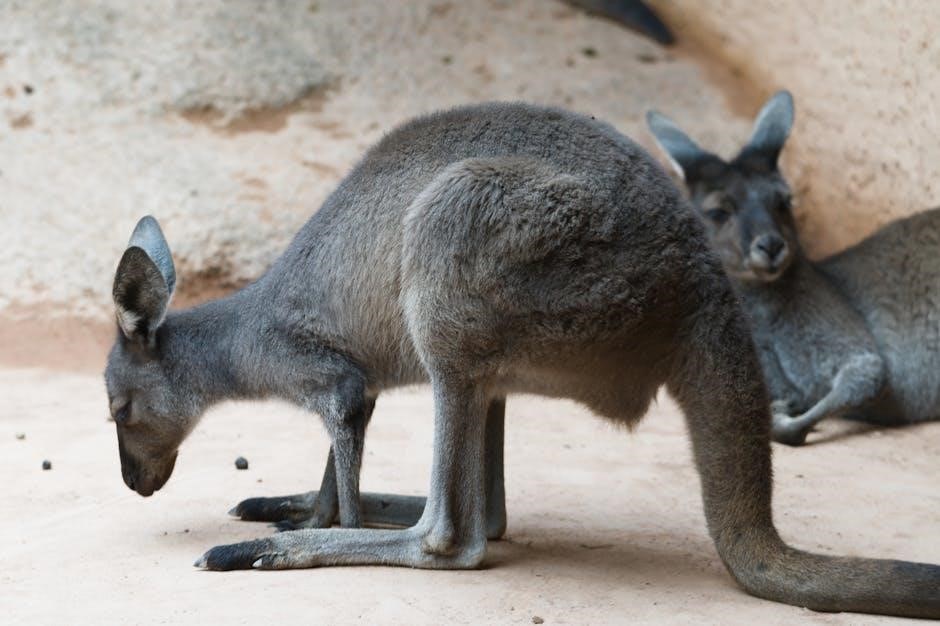
Distinguishing kangaroo and wallaby scat requires careful observation. Kangaroos produce pellet-like droppings, often quite large and dry, reflecting their fibrous diet. Wallaby droppings exhibit more variation depending on the species and their food source. Some wallaby species create smaller, more cylindrical pellets, while others produce scat with a partially formed shape.
Visual aids are invaluable; picture guides, like those available from Queensland’s DETSI, showcase the differences. Barbara Triggs’ “Tracks, Scats and Other Traces” provides comprehensive details. Utilizing downloadable PDFs alongside field observation enhances accurate identification. Consider scat’s location – kangaroos favor open areas, while wallabies prefer denser vegetation. Observing scat alongside tracks further confirms identification.
Identifying Kangaroo Scat
Kangaroo droppings are typically easily recognized due to their size and form. They are generally large, dark brown to black, and pellet-like, often appearing quite dry, especially in arid environments. The texture reflects their herbivorous diet, consisting primarily of grasses and shrubs. Observing scat alongside kangaroo tracks provides strong confirmation.
Resources like DETSI’s animal dropping identification pictures offer visual comparisons. Barbara Triggs’ field guide details characteristics, while downloadable PDFs provide portable references. Scat size can vary with individual kangaroos and diet, but generally remains substantial. Location is key; kangaroos frequent open grasslands and woodlands, so finding scat in these areas is common.
Wallaby Droppings: Variations
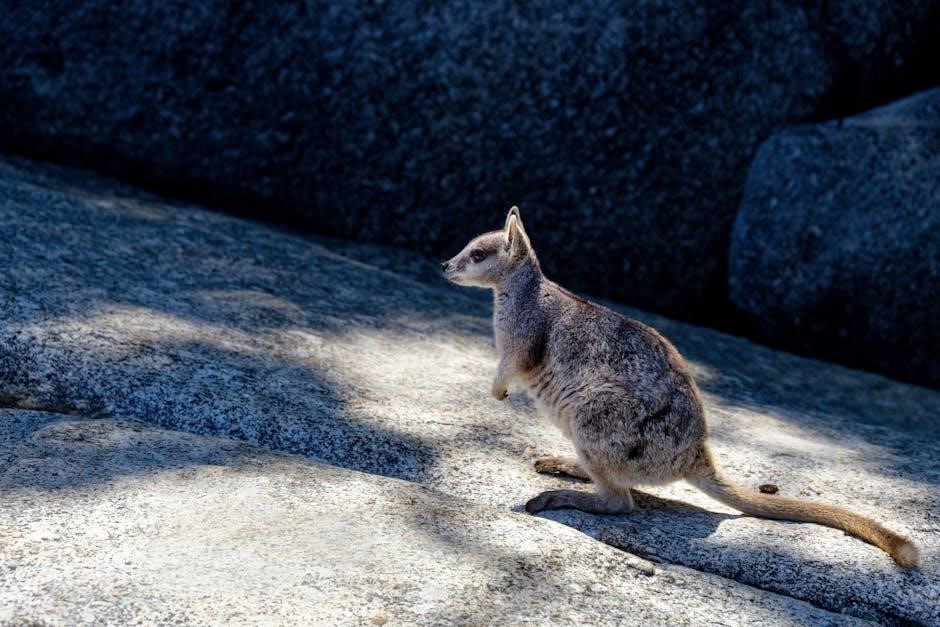
Wallaby scat exhibits greater variation than kangaroo droppings, reflecting differences in species and diet. Generally smaller and more cylindrical, wallaby scat can range in color from dark brown to almost black. Some species produce pellet-like droppings, while others create more elongated, rope-like forms. Identifying specific wallaby species from scat alone can be challenging.
Utilizing resources like DETSI’s identification pictures and Barbara Triggs’ guide is crucial. Downloadable PDFs offer convenient field references. Consider habitat; different wallaby species occupy varied environments. Comparing scat characteristics with available images and descriptions aids accurate identification, alongside noting location and any accompanying tracks.
Possums
Possum scat identification requires attention to detail, as droppings vary between species. Both Common Brushtail and Ringtail Possums leave distinctive signs. Resources like the Queensland Department of Environment’s pictures and Barbara Triggs’ “Tracks, Scats and Other Traces” are invaluable. Downloadable PDF guides provide portable references for field identification.
Possum droppings often contain partially digested fruit, leaves, and seeds, reflecting their omnivorous diet. Location is key; Brushtails frequent trees and buildings, while Ringtails prefer dense foliage. Careful observation, combined with visual aids from online databases and printed materials, enhances accurate species determination.
Common Brushtail Possum Scat
Brushtail Possum droppings are typically dark, cylindrical, and can be quite large, often 5-8cm long. They frequently contain a significant amount of fruit remnants, leaves, and occasionally, identifiable seeds. Visual guides, like those available as downloadable PDFs from Queensland’s DETSI, showcase characteristic appearances.
Identifying Brushtail scat often involves noting its location – frequently found on branches, roofs, or in tree hollows. Barbara Triggs’ field guide provides detailed illustrations aiding comparison. Online databases offer additional pictures for reference, helping distinguish it from other species’ droppings. Consistent shape and dietary components are key identifiers.
Ringtail Possum Droppings
Ringtail Possum scat differs noticeably from its brushtail cousin. It’s generally smaller, more pellet-like, and often appears as numerous, dark, elongated droppings clustered together. These droppings are primarily composed of leaves, buds, and flowers, reflecting their browsing diet.
PDF guides from resources like Queensland’s DETSI provide comparative pictures, highlighting the distinctions. Barbara Triggs’ “Tracks, Scats and Other Traces” offers detailed illustrations for accurate identification. Look for droppings in sheltered locations – dense foliage, tree forks, or within nests. Observing the size, shape, and contents alongside visual aids is crucial for correct assessment.
Wombats
Wombat scat is remarkably distinctive due to the animal’s digestive process and diet of grasses and roots. It’s characterized by being large, cylindrical, and often cube-shaped – a unique feature amongst Australian mammals! This unusual form is thought to be created by the varying elasticity of their intestinal walls.
Identification resources, including downloadable PDFs and field guides like Barbara Triggs’ work, showcase images of wombat scats. Queensland’s DETSI provides helpful pictures for comparison. Wombat latrines, communal dung heaps, are frequently found on prominent locations, aiding in detection and species confirmation.
Wombat Scat Characteristics
Distinctive features define wombat droppings: large size (often several centimeters long), a cylindrical shape, and notably, a cube-like form. This unique morphology results from intestinal compression, a fascinating biological adaptation. The scat is typically dark brown, becoming lighter with age, and contains undigested plant matter.

Visual aids, such as those found in downloadable PDFs and field guides like Barbara Triggs’ “Tracks, Scats and Other Traces”, are invaluable for accurate identification. Queensland’s DETSI offers pictures illustrating these characteristics. Observing scat alongside wombat tracks further confirms identification, enhancing field observation skills.
Bandicoots
Bandicoot scat is typically small, dark, and pellet-like, often containing insect remains and seeds – reflecting their diet. It’s frequently deposited in latrine sites, small collections of droppings used for marking territory. Identifying bandicoot droppings requires careful observation, as size can vary between species.
Resources like field guides (Triggs’ “Tracks, Scats and Other Traces”) and online databases provide comparative images. Queensland’s DETSI offers helpful pictures for visual comparison. Downloadable PDF guides can be particularly useful in the field, aiding accurate identification alongside track identification, enhancing understanding of these elusive creatures.
Identifying Bandicoot Droppings
Bandicoot droppings are generally small, cylindrical pellets, ranging from 3-8mm in diameter, and dark in color. They often contain undigested insect parts, seeds, and occasionally small pieces of plant matter, reflecting their insectivorous and omnivorous diet. Look for groupings in latrine sites – designated areas where bandicoots repeatedly deposit scat.
Visual aids are crucial for accurate identification. Resources like Abigail Rowntree’s scat cards and the Queensland Department’s online pictures provide comparative examples. Barbara Triggs’ field guide offers detailed descriptions and illustrations, while downloadable PDFs offer portable reference material for field identification.
Dingoes and Wild Dogs
Dingo and wild dog scat presents identification challenges due to dietary overlap. Generally, their droppings are larger and more variable than those of smaller mammals, often containing bones, fur, and large seed fragments. The presence of domestic animal remains suggests hybridization with wild dogs.
Accurate identification relies on detailed observation and comparative resources. Scat identification cards by Abigail Rowntree, alongside pictures from Queensland’s DETSI, are invaluable. Barbara Triggs’ “Tracks, Scats and Other Traces” provides comprehensive details, and downloadable PDFs offer convenient field guides for distinguishing between dingo and wild dog scat.
Dingo Scat: Key Features
Dingo scat typically exhibits a cylindrical shape with tapered ends, often displaying a segmented appearance. Its color varies depending on diet, ranging from dark brown to black when consuming meat, and lighter shades with bone fragments. Size is substantial, reflecting their carnivorous diet and larger body size.
Visual aids, such as pictures from Queensland’s DETSI, are crucial for accurate identification. Resources like Abigail Rowntree’s scat cards and Barbara Triggs’ field guide provide comparative examples. Downloadable PDFs enhance field study, detailing key features and differentiating dingo scat from similar species, aiding in reliable assessment.
Wild Dog Droppings – Distinctions
Distinguishing wild dog scat from dingo droppings, or those of other canids, requires careful observation. Wild dog scat often contains more bone fragments and hair due to a broader diet, including scavenging. It may also appear more variable in shape and consistency, reflecting diverse food sources.
Detailed resources, including identification pictures from Queensland’s DETSI, are invaluable. Barbara Triggs’ “Tracks, Scats and Other Traces” provides comparative analysis. Utilizing downloadable PDFs alongside scat cards (Abigail Rowntree) allows for precise differentiation, considering habitat and regional variations for accurate field identification.

Reptile and Bird Droppings
Identifying reptile and bird droppings requires recognizing unique characteristics; pictures from Queensland DETSI and guides like Triggs’ book are helpful resources.
Snake Droppings
Distinguishing snake droppings, or urates, differs significantly from mammal scat. Snakes excrete a semi-solid, whitish paste containing uric acid, rather than liquid urine. Identifying these requires a keen eye, as they often blend with the surrounding environment. Pictures available from Queensland’s Department of Environment, Tourism, Science and Innovation (DETSI) provide valuable visual references for various species.
Unlike fecal matter, snake urates are primarily composed of nitrogenous waste. They frequently appear chalky or crystalline, and may contain traces of undigested bone or insect exoskeletons, depending on the snake’s diet. Field guides, such as Barbara Triggs’ “Tracks, Scats and Other Traces,” offer detailed descriptions and illustrations aiding accurate identification. Utilizing downloadable PDF guides alongside visual resources enhances understanding of these unique excretory products.
Identifying Snake Scat (Urates)
Recognizing snake urates requires understanding their unique composition. Unlike typical feces, they’re semi-solid, whitish pastes containing uric acid – a nitrogenous waste product. DETSI’s animal droppings identification pictures showcase this distinct appearance, aiding field recognition. These aren’t fecal matter, but concentrated waste, often appearing chalky or crystalline.
Look for traces of undigested prey – bone fragments or insect exoskeletons – indicating recent meals. Size varies with snake species and diet. Resources like Barbara Triggs’ field guide provide comparative illustrations. Downloadable PDF guides supplement visual learning, detailing urate characteristics. Careful observation, combined with reliable visual aids, is crucial for accurate snake scat identification in Australian environments.
Lizard Droppings
Lizard droppings are typically small, dark, and often contain undigested insect parts or plant matter, reflecting their varied diets. Identifying them relies on size, shape, and contents. DETSI’s droppings identification pictures offer valuable visual references for Australian species. These droppings are generally more solid than snake urates, appearing as miniature, elongated pellets.
Variations exist based on lizard size and food source. Larger lizards produce more substantial droppings. Resources like field guides, including Barbara Triggs’ work, detail these differences. Downloadable PDF guides provide supplementary images and descriptions. Accurate identification requires careful observation and comparison with reliable visual resources, aiding in understanding lizard activity within their habitat.
Common Lizard Scat Characteristics
Generally, common Australian lizard scat presents as small, dark, cylindrical or pellet-like droppings. They frequently contain visible remnants of insects – exoskeletons, wings – and occasionally seeds or plant fragments, showcasing their insectivorous or omnivorous diets. DETSI’s identification pictures are crucial for visual comparison.
The consistency is typically firm, though can vary with hydration; Size correlates with lizard size; larger species yield larger droppings. PDF guides and field resources, like Triggs’ “Tracks, Scats and Other Traces”, detail these nuances. Observing the location – near basking spots or foraging areas – aids identification. Careful examination of contents, combined with visual references, is key to accurate assessment.
Bird Droppings
Bird guano varies dramatically based on diet and species. Generally, it consists of a white, chalky urate component and dark fecal matter, often encased in a thin membrane. Identifying bird droppings requires considering size, shape, and contents. Seeds, insect parts, or fruit remnants are common indicators of dietary habits.
Resources like DETSI’s identification pictures showcase the diversity. PDF guides detail specific species – for example, Kookaburra droppings often contain bones and feathers. Location is vital; nests or frequently visited perches concentrate droppings. Examining the consistency and color provides further clues. Accurate identification benefits from combining visual references with habitat knowledge.
Identifying Bird Guano
Bird guano, or bird droppings, is typically recognized by its white urate component, a semi-solid excretion of uric acid. This is often mixed with darker fecal matter, and sometimes encased in a thin, mucousy coating. The appearance varies significantly depending on the bird’s diet.
Queensland’s DETSI provides helpful identification pictures illustrating these variations. PDF guides offer detailed visuals for specific Australian species. Observing the presence of seeds, insect fragments, or undigested food particles aids identification. Guano often accumulates near nesting sites or favored perches. Recognizing these patterns, alongside visual references, is key to accurate assessment.
Specific Bird Droppings (e.g., Kookaburra)
Kookaburra droppings are notably distinct, often appearing as a splattered, white-washed smear with a dark central portion. This reflects their carnivorous diet, including insects, lizards, and small mammals. The white component is primarily urates, while the darker section contains digested remains.
Queensland’s DETSI resources and available PDF guides showcase images of Kookaburra scat for comparison. Observing the size and consistency, alongside the presence of bone fragments or insect exoskeletons, aids accurate identification. Comparing field observations with photographic references from reliable sources, like those found online, is crucial for confident assessment.

Using Field Guides and Resources
Essential tools include Barbara Triggs’ comprehensive guide, Queensland DETSI’s visual aids, and Abigail Rowntree’s scat cards – all enhancing identification skills.
Barbara Triggs’ “Tracks, Scats and Other Traces”
A cornerstone resource for Australian wildlife tracking, Barbara Triggs’ “Tracks, Scats and Other Traces” provides invaluable information for identifying mammals across the continent. This field guide uniquely focuses on interpreting the signs animals leave behind, specifically tracks and scat, eliminating the need for direct animal sightings.
Booktopia highlights that the book equips readers with all the necessary knowledge to confidently identify mammals solely from their tracks or other traces. It’s a detailed compendium, offering a systematic approach to scat analysis, considering shape, size, content, and location. While not solely focused on pictures, the descriptions are detailed enough to aid visual identification when combined with field observation. Published in 2004, it remains a highly recommended resource for both amateur enthusiasts and professionals seeking a comprehensive understanding of Australian mammal signs.
Queensland Department of Environment Resources
A practical guide to unraveling the mystery of “whose poo is whose?” the Queensland Department of Environment, Tourism, Science and Innovation (DETSI) offers a valuable resource for animal droppings identification. Their online platform provides a collection of pictures showcasing scat from a diverse range of species found throughout Queensland.
This readily accessible resource eliminates guesswork, allowing users to visually compare found droppings with the provided images. DETSI’s initiative is particularly useful for residents and visitors keen on understanding the wildlife activity in their surroundings. While a dedicated PDF download isn’t explicitly mentioned, the online pictures serve as a convenient and portable field guide. It’s a fantastic starting point for beginners and a quick reference for experienced trackers alike, promoting greater awareness of Queensland’s fauna.
Scat Identification Cards (Abigail Rowntree)
Marie Viljoen’s website highlights the availability of Australian animal track and scat KEY CARDS created by Abigail Rowntree. These cards represent a portable and focused resource for identifying wildlife signs, specifically concentrating on tracks and droppings. While not a comprehensive PDF guide, the cards offer a curated selection of key characteristics for quick field identification.
The cards likely present visual aids and concise descriptions, enabling users to efficiently determine the species responsible for observed scat. They function as a handy tool for bushwalkers, researchers, and anyone interested in learning more about Australian wildlife. Though details regarding the card’s content are limited, they represent a specialized resource complementing broader identification guides like Barbara Triggs’ comprehensive field guide.

Tips for Accurate Identification
Successful scat ID requires considering location, age, and condition, alongside other tracks. Utilize pictures and PDFs for comparison, enhancing accuracy in the field.
Considering Location and Habitat
Context is crucial when identifying Australian animal droppings. A scat’s location provides vital clues about the species present. For instance, droppings near waterways suggest semi-aquatic animals, while those in dense bushland point towards terrestrial mammals.
Habitat plays a significant role; understanding the typical range of species in a given area narrows down possibilities. Resources like DETSI’s identification pictures, alongside downloadable PDFs, become more effective when combined with habitat knowledge.
Consider elevation, vegetation type, and proximity to human settlements. A scat found in a suburban garden is less likely to be from a remote wilderness species. Utilizing field guides, such as Barbara Triggs’ “Tracks, Scats and Other Traces”, alongside location data, dramatically improves identification accuracy.
Scat Age and Condition
Determining age and condition is vital for accurate Australian scat identification. Fresh droppings are typically moist and darker in color, while older samples become dry, faded, and potentially fragmented. Insect activity and weathering also indicate age.
The presence of undigested food particles – seeds, fur, or bone – can offer clues about diet and, consequently, species. Examining the surface texture, whether smooth, rough, or segmented, aids identification.
Resources like Abigail Rowntree’s scat cards, coupled with DETSI’s identification pictures and downloadable PDFs, become more useful when considering these factors. Remember, decomposition alters appearance, so comparing to reference images is essential for reliable results.
Combining Scat with Other Tracks
Holistic assessment significantly improves Australian animal identification. Scat analysis is most effective when combined with other field signs – tracks, scratches, diggings, or browse patterns. Barbara Triggs’ “Tracks, Scats and Other Traces” emphasizes this integrated approach.
For example, scat near distinct footprints narrows possibilities. Consider habitat; a scat resembling a dingo’s found near livestock suggests wild dog activity. Utilizing DETSI’s identification pictures alongside track guides enhances accuracy.
Downloadable PDFs and resources like Rowntree’s scat cards provide visual references. Cross-referencing scat characteristics with other evidence builds a stronger case for species confirmation, minimizing misidentification.

Resources for Further Learning (PDFs & Online)
Expand your knowledge with online databases and downloadable guides, including DETSI’s pictures and PDFs. These resources aid Australian scat identification efforts.
Online Databases of Australian Scat
Navigating the digital landscape for Australian scat identification reveals several valuable online resources. While a single, comprehensive database remains elusive, various departmental websites and dedicated naturalist platforms offer crucial photographic references. The Queensland Department of Environment, Tourism, Science and Innovation (DETSI) provides a particularly useful collection of animal droppings identification pictures, categorized by species throughout Queensland.
These online visuals are invaluable for comparing field observations. Furthermore, exploring forums and naturalist groups often yields shared experiences and user-submitted images, expanding the available dataset. Remember to critically evaluate image sources and cross-reference with established field guides like Barbara Triggs’ “Tracks, Scats and Other Traces” for accurate identification. Continuously updated online resources are key to mastering this skill.
Downloadable PDF Guides
Convenient and portable, downloadable PDF guides offer a practical approach to Australian scat identification in the field. While a dedicated, universally available PDF database is limited, resources are scattered across various organizational websites. The Queensland Department of the Environment, Tourism, Science and Innovation (DETSI) provides accessible identification pictures, often available for download and offline use.
Additionally, supplemental materials and excerpts from comprehensive field guides, such as Barbara Triggs’ “Tracks, Scats and Other Traces,” may be found as downloadable PDFs. Abigail Rowntree’s scat identification cards, though primarily physical, may have accompanying digital resources. These PDFs are invaluable for quick reference when internet access is unavailable, enhancing field study efficiency.