
HuTools Lock Manual: A Comprehensive Guide
HuTools offers keyless entry, auto-lock features, and seamless third-party integrations like Dropi for dropshipping automation, enhancing security and convenience.
HuTools locks represent a cutting-edge approach to home and business security, offering a sophisticated keyless entry system designed for modern lifestyles. These locks eliminate the need for traditional keys, providing enhanced convenience and control over access to your property. Featuring robust locking mechanisms and advanced code protection, HuTools prioritizes the safety of your belongings and peace of mind.

Beyond basic security, HuTools locks integrate seamlessly with smart home ecosystems and platforms like Dropi, enabling automation and streamlined management. The auto-lock functionality, configurable between 10 and 99 seconds, adds an extra layer of security, ensuring your door is always securely fastened, even if you forget. This manual provides a comprehensive guide to understanding, installing, and utilizing all the features of your HuTools lock.
Understanding Keyless Entry Features
HuTools keyless entry eliminates traditional keys, utilizing secure digital codes for access. Users can create unique, personalized codes, offering convenient and controlled entry for family, friends, or service providers. The system supports codes up to 12 digits, allowing for complex and secure combinations – for example, building upon a base code like 45789 with variations like 232345789 or 245789555.
This feature enhances security by removing the risk of lost or copied keys. The lock’s intelligent design incorporates measures to prevent brute-force attacks and unauthorized access. Furthermore, integration with platforms like Dropi can streamline access management for rental properties or businesses. Remember to disable Caps Lock if encountering issues, as it can interfere with code entry.
Auto-Lock Functionality
HuTools locks feature an auto-lock function, providing an added layer of security and peace of mind. This feature automatically secures the door after a pre-set period, eliminating the worry of accidentally leaving it unlocked. The auto-lock delay time is adjustable, ranging from 10 to 99 seconds, allowing users to customize the setting to their preferences and lifestyle.
If automatic locking is no longer desired, it can be easily disabled manually. Simply press and hold the ‘1’ button for three seconds to toggle the auto-lock function on or off. This flexibility ensures the lock adapts to changing needs. This is particularly useful for situations where extended access is required without constant manual locking.
Configuring Auto-Lock Delay Time
The HuTools lock allows for precise customization of the auto-lock delay time, enhancing its usability. Users can select a delay between 10 and 99 seconds, tailoring the lock’s behavior to their specific needs. This adjustment is crucial for balancing security with convenience, ensuring the door locks promptly without causing unnecessary delays for frequent access;
To configure the delay, navigate to the settings menu on the lock’s interface. Select the “Auto-Lock” option and then use the provided controls to increase or decrease the delay time. The selected duration will be automatically saved and implemented. Regularly reviewing and adjusting this setting can optimize the lock’s performance based on changing routines.
Disabling Auto-Lock Manually
HuTools locks provide a straightforward method for manually disabling the auto-lock function, offering users complete control over their door security. If automatic locking is no longer desired, or if it interferes with specific access patterns, it can be easily deactivated through the lock’s interface. This feature is particularly useful for situations where the door needs to remain unlocked for extended periods.
To disable auto-lock, simply press and hold the ‘1’ button on the keypad for approximately three seconds. A confirmation signal, usually an audible beep or a visual indicator, will confirm that the auto-lock feature has been successfully turned off. To re-enable it, repeat the same process.
User Code Management
HuTools locks prioritize security and convenience through robust user code management. This system allows homeowners to create and manage unique access codes for family members, guests, or service providers. Each user can be assigned a personalized code, eliminating the need for physical keys and enhancing overall security. The system supports codes up to 12 digits in length, offering a wide range of combination possibilities.
Generating secure combinations is crucial. Avoid easily guessable numbers like birthdays or sequential digits. Instead, opt for random combinations. For example, if your code is 45789, variations like 232345789 or 245789555 will also unlock the door, adding an extra layer of protection against unauthorized access.
Creating User Codes
HuTools simplifies user code creation directly through the lock’s interface. The process is intuitive, guiding you step-by-step to establish secure access for authorized individuals. Begin by accessing the user management section within the lock’s settings. From there, you can add new users and assign them unique codes. Remember, each code can be up to 12 digits long, providing ample opportunity for complex and secure combinations.
Prioritize creating codes that are not easily guessable. Avoid using personal information like birthdates or addresses. Instead, generate random number sequences to maximize security. Once created, test each code to ensure proper functionality before granting access to the intended user. Regularly review and update user codes as needed.
Maximum User Code Length (Up to 12 Digits)
HuTools locks offer a generous user code length, accommodating combinations of up to 12 digits. This extended length significantly enhances security by exponentially increasing the possible code variations, making brute-force attempts considerably more difficult. While shorter codes are permissible, utilizing the full 12-digit capacity is strongly recommended for optimal protection.
The system allows for creative code generation; for example, if your base code is 45789, variations like 232345789, 245789555, or 445789666 are also valid unlocking sequences. This feature provides flexibility while maintaining a high security standard. Remember to document all created codes securely to avoid accidental lockout situations and ensure easy management of access permissions.

Generating Secure Combinations
HuTools prioritizes security, and generating strong user codes is crucial. Avoid easily guessable combinations like birthdays, anniversaries, or sequential numbers (123456). Instead, opt for random digit sequences. The lock’s system allows for expanded codes beyond the primary set, offering a layer of obfuscation. For instance, if ‘45789’ is your core code, variations like ‘232345789’ or ‘245789555’ are also valid.
Leveraging this feature, you can create multiple, equally functional codes, reducing the risk associated with a single compromised code. Remember to document these variations securely, separate from the primary code. Regularly changing user codes is also a best practice, further bolstering your security posture against unauthorized access. Prioritize complexity and randomness for optimal protection.
Lock Operation and Security
HuTools locks employ robust locking mechanisms, ensuring reliable security for your property. The keyless entry system utilizes advanced encryption to protect user codes from unauthorized access. Security measures include code protection protocols, preventing simple code-guessing attempts. The auto-lock function, configurable between 10 and 99 seconds, adds an extra layer of security, automatically securing the door if forgotten.
Regularly review user codes and disable any that are no longer needed. Be mindful of potential interference, such as accidentally engaging Caps Lock, which can prevent correct code entry. Maintaining awareness of these operational details and security features is vital for maximizing the lock’s protective capabilities and ensuring peace of mind.
Locking Mechanisms Explained
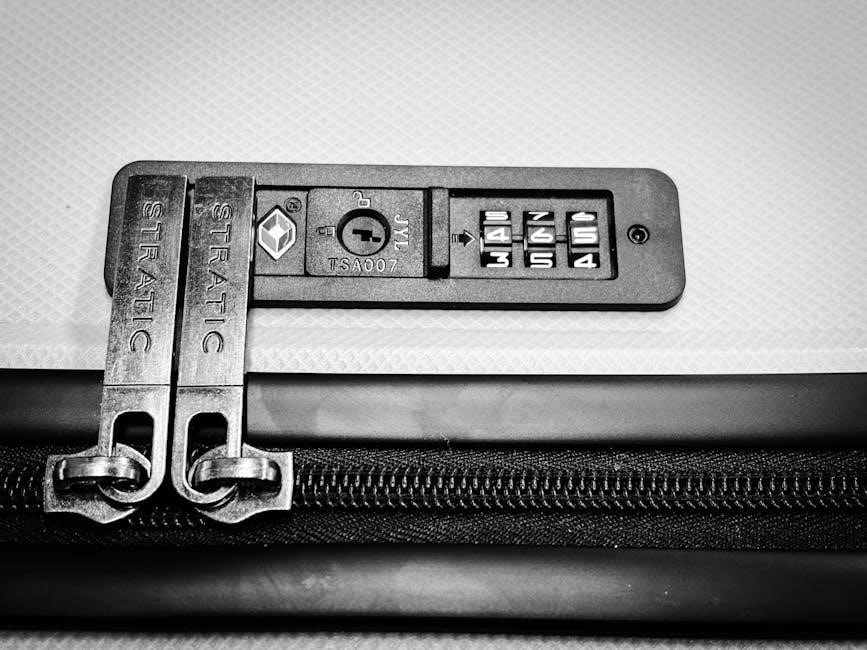
HuTools locks utilize a sophisticated deadbolt system, providing a strong physical barrier against forced entry. The electronic locking mechanism is activated by a correctly entered user code, initiating the bolt extension. This system bypasses traditional key vulnerabilities, enhancing security. The internal components are designed for durability and resistance to tampering, ensuring long-term reliability.

The lock’s programming allows for customized security settings, including auto-lock functionality. Upon activation, the internal motor securely engages the deadbolt. The system also incorporates anti-pick and anti-bump features, further bolstering its resistance to unauthorized access. Regular testing of the locking mechanism is recommended to confirm proper operation and maintain optimal security.
Security Measures and Code Protection
HuTools locks prioritize security through multiple layers of protection. User codes are encrypted to prevent unauthorized access, and the system employs a scrambling algorithm to mask the actual code during entry. To further enhance security, the lock accepts combinations derived from the primary user code – for example, adding repeating digits (232345789).
This feature creates numerous potential access combinations, making it significantly harder for intruders to guess the correct code. The lock also features tamper alerts and lockout functions after multiple incorrect attempts. Regularly changing user codes is recommended. The system’s design incorporates protection against common lock-picking techniques, ensuring a robust defense against potential breaches.
Time Zone Considerations (AEST/AEDT)
HuTools locks accurately record events based on the Australian time zone. Understanding the difference between Australian Eastern Standard Time (AEST) and Australian Eastern Daylight Time (AEDT) is crucial for correct log interpretation. AEST is UTC+10, while AEDT (observed during daylight saving) is UTC+11.
Most cities in the AEST zone currently observe Daylight Saving Time, operating on AEDT. When configuring the lock, ensure the correct time zone is selected to maintain accurate timestamps for access logs and scheduled functions. Incorrect time zone settings can lead to discrepancies in event recordings. Always verify the current time zone for your specific location within Australia.
Australian Eastern Standard Time (AEST)
HuTools locks default to Australian Eastern Standard Time (AEST), which is UTC+10. This is the standard time observed year-round in regions like Queensland, and during the winter months in New South Wales, Victoria, South Australia, Tasmania, and the Australian Capital Territory. Accurate timekeeping is vital for event logging and scheduled features within the lock’s system.
When initially setting up your HuTools lock, confirm AEST is selected if your location consistently operates on this time zone. AEST is two hours ahead of Western Standard Time (WST) and ten hours ahead of Coordinated Universal Time (UTC). Proper AEST configuration ensures all recorded events align with your local time, providing a reliable security record.
Daylight Saving Time (DST) in Australia
HuTools locks intelligently handle Daylight Saving Time (DST) adjustments in participating Australian states. Most cities within the AEST zone transition to Australian Eastern Daylight Time (AEDT) – UTC+11 – during the warmer months, typically from October to April. The lock automatically updates to reflect this change, ensuring accurate time-stamped event logs.

However, Queensland does not observe DST, remaining on AEST year-round. Verify your location’s DST observance during initial setup. Incorrect DST settings can cause discrepancies in scheduled functions and recorded access times. HuTools provides options to manually override DST if needed, though automatic adjustment is recommended for most users to maintain accurate timekeeping and security records.
Troubleshooting Common Issues

HuTools locks are designed for reliability, but occasional issues may arise. A frequent problem is accidental Caps Lock activation; ensure Caps Lock is disabled before entering your user code. Forgotten user codes require a factory reset, potentially losing all saved codes – consult the full manual before proceeding.
If the lock fails to respond, check battery levels. Auto-lock malfunctions often stem from incorrect delay settings; verify the configured delay (10-99 seconds) is appropriate. For persistent problems, consult the detailed troubleshooting section in the 36-page manual (3MB) or contact HuTools support for assistance. Remember to document any error messages for faster resolution.
Caps Lock Interference
A common issue encountered with HuTools keyless entry locks is inadvertent Caps Lock activation on the keypad. The system is case-sensitive, meaning that entering your user code with Caps Lock enabled will result in an unsuccessful attempt to unlock the door. Always visually confirm the Caps Lock indicator light is off before inputting your code.
If the indicator is illuminated, simply press the Caps Lock key once to disable it. Then, carefully re-enter your code. This simple step resolves the vast majority of entry failures. Remember, even a single capitalized character will prevent the lock from recognizing your valid user code. Prioritize checking Caps Lock status for quick troubleshooting.
Forgotten User Codes – Recovery Options
Losing your HuTools lock user code can be frustrating, but recovery options are available. Unfortunately, there’s no universal “master code” to bypass security. The primary solution involves contacting HuTools customer support with proof of ownership – typically a purchase receipt and identification verifying your address.
They will guide you through a secure reset process, potentially requiring a factory reset of the lock. Be aware a factory reset will erase all existing user codes, necessitating their re-creation. As a preventative measure, securely store a written copy of your primary code in a separate, safe location, away from the lock itself. Regularly test your code to ensure recall.
HuTools Lock Installation Overview
HuTools keyless entry door locks are designed for easy installation, typically replacing existing deadbolt mechanisms. The process generally involves removing your current lock, inserting the HuTools lock body, and securing it with the provided mounting hardware. Ensure the door’s thickness is compatible with the lock’s specifications before beginning.
Detailed, step-by-step instructions are included in the packaging, alongside all necessary tools. A Phillips head screwdriver is usually sufficient. Power is supplied by batteries, so installation of these is the final step. Thoroughly test the lock’s functionality – locking, unlocking, and auto-lock features – after installation to confirm correct operation.
Easy Installation Process
The HuTools lock installation prioritizes user-friendliness. Begin by removing the existing deadbolt, retaining the strike plate if compatible. Insert the HuTools lock body, aligning the spindle with the door’s opening. Secure the interior mounting plate, ensuring a snug fit. Connect the cable for power, then install the exterior keypad, tightening screws firmly but not excessively.
Battery installation is straightforward – follow the polarity markings within the battery compartment. Test the lock’s operation multiple times, verifying smooth locking and unlocking. Refer to the included manual for visual aids and troubleshooting tips. This process typically takes under 30 minutes with minimal tools.
HuTools and Third-Party Integrations (Dropi)
HuTools enhances business efficiency through integration with platforms like Dropi, streamlining dropshipping automation. Dropi facilitates product sourcing and order fulfillment, directly connecting to supplier networks. Utilize Dropi’s pricing tools to configure optimal markups – either through multiplication or percentage-based profit margins – allowing the app to automatically calculate competitive selling prices.
This integration simplifies inventory management and reduces manual effort. Dropi centralizes key dropshipping tasks, offering a unified dashboard for monitoring sales, tracking shipments, and managing customer data. By automating pricing and order processing, HuTools and Dropi empower businesses to scale effectively.
Utilizing Dropi for Dropshipping Automation
Dropi centralizes crucial dropshipping tasks, offering a streamlined workflow for HuTools users. The platform automates product listing, order fulfillment, and inventory synchronization, minimizing manual intervention. Dropi connects directly to supplier catalogs, enabling effortless product import and real-time stock updates. This automation reduces errors and accelerates order processing times, improving customer satisfaction.
Furthermore, Dropi provides tools for managing multiple stores and suppliers from a single dashboard. Automated pricing rules and bulk editing features optimize profitability and efficiency. By leveraging Dropi’s capabilities, businesses can focus on marketing and growth, while the platform handles the complexities of dropshipping logistics.
Pricing Tools and Markup Configuration
Dropi equips users with robust pricing tools to maximize profits when selling HuTools locks. Configure a general markup, either through multiplication or a percentage-based profit margin, and Dropi automatically calculates optimal selling prices. This dynamic pricing adjusts to supplier costs, ensuring consistent profitability. Users can establish tiered pricing rules based on product variations or order quantities.
Dropi also supports competitor price monitoring, allowing for strategic price adjustments to maintain a competitive edge. Automated repricing rules can be set to automatically lower or raise prices based on competitor activity. These features streamline pricing management, saving time and maximizing revenue potential for HuTools dropshippers.